If your website runs through Cloudflare, there is a new switch in your dashboard this week, and it is the kind of thing that is easy to flip on without thinking about what happens next. I manage a lot of small business sites on Cloudflare, so I spent part of the holiday reading the fine print. Here is what it does, what it costs and what I would do before touching it.
On November 25, Cloudflare introduced Search for Agents, a one-click way to make your website searchable by AI agents. These are the AI tools that browse the web for people, look up products and services, compare options and pull answers from websites. Instead of making those agents load your pages one at a time, Cloudflare gives them a search box built just for them.
What Cloudflare Launched
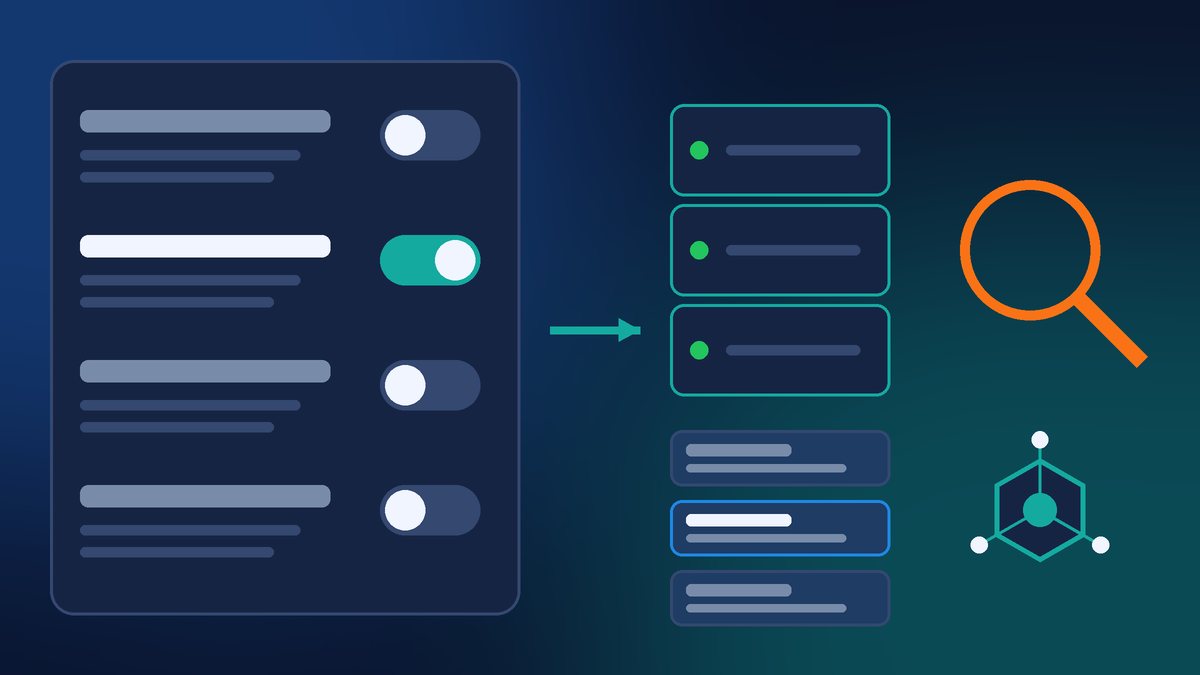
According to Cloudflare’s documentation, you turn it on from your domain’s Overview page, under Quick Actions. Once it is on, Cloudflare does three things:
- It indexes your site. Cloudflare creates an AI Search instance in your account and crawls your pages through your sitemap and links. By default it covers up to 100,000 pages, five links deep, and refreshes every 24 hours. Subdomains are not included by default.
- It advertises the search to agents. Cloudflare adds a few hidden meta tags to every page telling visiting agents where your search lives and how to use it. Your human visitors never see them.
- It answers agent searches from your domain. Agents send questions to an address on your own site,
/.well-known/search, and get back matching passages from your pages in Markdown, a plain-text format. Cloudflare is clear that it returns your content, not an AI-written answer. The agent’s own AI writes the reply to its user.
Cloudflare tested it on its own developer documentation first and says agents do a good job of discovering the search and using it. The feature is available on all plans, including Free, though the documentation labels it a beta.
Who Pays for the Searches?

This is the part that got my attention. As The New Stack put it in its headline, site owners foot the query bill. Search for Agents runs on Cloudflare’s AI Search product, and Cloudflare’s pricing page says AI Search billing begins on December 1, 2026. That is next Tuesday.
Every account gets a monthly allowance: 5 million ingestion tokens (the text Cloudflare reads into the index), 10 GB-month of storage, 1,000 semantic queries and 1,000 full-text queries. Beyond that, the listed rates are:
- $0.75 per million tokens to read content into the index
- $2.00 per GB-month of storage
- $0.75 per 1,000 semantic, vector or hybrid queries (hybrid is the Search for Agents default)
- $0.10 per 1,000 full-text queries
For a typical small business site with a few dozen pages, indexing and storage should stay well inside the allowance. Queries are the open question, because you do not control how often agents search. PPC Land calculated that a site getting 50,000 agent searches in a month would pay $36.75 for queries alone, before indexing and storage. Not huge, but it is a new cost driven by traffic you cannot predict. PPC Land also notes the documentation does not say whether searches answered from the 48-hour cache are billed.
There is a limit on the free side too. Accounts on the Workers Free plan can crawl 500 pages per day. For most small business sites that is plenty. For a store with thousands of product pages, the first full index could take weeks.
Should Your Business Turn It On?
My honest answer for most small businesses: not yet, and not without a reason. Here is why.
First, it is unclear which agents actually use it. PPC Land points out that Cloudflare’s announcement names only one agent tool, OpenCode, and that it does not say whether the hidden tags follow any published standard or whether any AI company has agreed to look for them. Cloudflare told The New Stack that a common approach to discovering search endpoints across providers would make sense, which tells me this is still early.
Second, an agent that searches your site does not visit your site. The search returns passages of text, not a web page, so there is no page view, no analytics tag firing and no contact form in front of the person. You may be answering questions for people who never see your brand, your offer or your phone number.
Third, everything you index becomes searchable. Cloudflare’s own documentation says to index only content you intend to make publicly searchable. If you have old landing pages, staff-only pages or outdated pricing that are still technically reachable, an agent could quote them.
That said, it is not all downside. Requests to the search address still go through your bot settings, AI Crawl Control and firewall rules, so your existing protections stay in place. If you have read my posts on AI crawlers overloading small business sites or on Google’s AI agent and your firewall, you know I would rather give agents a clean, efficient way in than have them hammer pages. And for a business that sells to people who already use AI assistants to shop, being easy for agents to read may become an advantage.
What I Would Do Before Flipping the Switch

- Check whether it is already on. Open each domain in Cloudflare and look at Quick Actions on the Overview page. If someone on your team turned it on to try it, decide now whether to keep it before billing starts on December 1.
- Clean up what is public. Remove or noindex old pages, expired offers and outdated prices. Anything reachable can end up in the index.
- Make your key facts easy to find on your pages. Services, service areas, hours, pricing ranges and how to contact you should be written plainly in text, not buried in images.
- If you test it, start with one site. Read the pricing notice when you confirm, then look at the AI Search instance in your account after a few weeks to see how many queries you are getting.
- Review your firewall and bot settings. PPC Land points out that Cloudflare’s crawling documentation says bot rules, firewall rules and Turnstile challenges also apply to the AI Search crawler, so a strict setup could block the crawl that builds your index.
- Keep measuring real leads. Agent searches will not show up as visits. Calls, form submissions and bookings are still the numbers that matter.
My Take
Search for Agents is a smart idea, and I expect more tools like it. The web is clearly being rebuilt for two kinds of visitors, people and the AI tools working for them. But a one-click switch that indexes your whole site and bills you per search deserves a few minutes of thought first. For most of my clients, the better investment right now is a website with clear, accurate, up-to-date content, because that is what every agent, search engine and customer reads first.
If you want help checking your Cloudflare settings, cleaning up old pages or getting your website ready for AI search, contact Final Web Design. I am happy to look at your setup with you and tell you whether this switch makes sense for your business.
Sources: Cloudflare Blog, “Introducing Search for Agents” (Nov 25, 2026); Cloudflare AI Search docs, “Search for Agents”; Cloudflare AI Search docs, “Limits & pricing”; The New Stack, “Cloudflare now lets websites add search for AI agents with a single toggle. Site owners foot the query bill.” (Nov 26, 2026); PPC Land, “Cloudflare lets websites switch on a search box built for AI agents” (Nov 26, 2026).