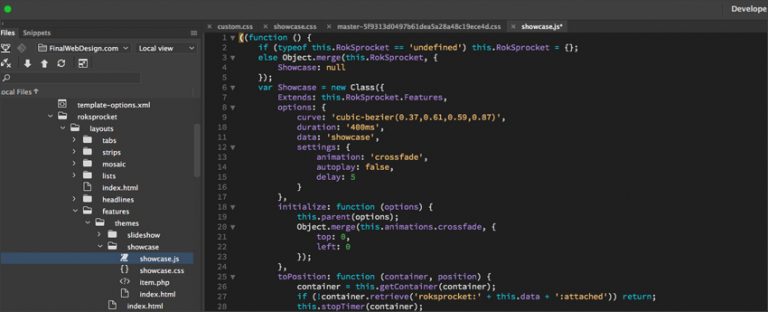
CSS or Cascading Style Sheets are the design language of websites. Using CSS developers can style the HTML of sites, including elements used throughout the website such as a header section or footer. Beyond simply styling text and page layouts, CSS plays a pivotal role in ensuring a site’s design remains consistent, maintainable, and future-proof. By separating presentation (CSS) from content structure (HTML), developers can update the look and feel of an entire site by editing a single stylesheet — no need to touch every HTML file. This separation also improves accessibility and cross-device compatibility: for example, using responsive CSS techniques (like media queries, flexible grids, and fluid typography) makes it easier to ensure a website looks great on desktops, tablets, and smartphones alike. Additionally, modern CSS features (such as transitions, transforms, flexbox, and CSS grid) enable designers to build dynamic, interactive layouts and animations without resorting to heavy scripting. In short, CSS remains a powerful — and often underappreciated — tool that defines not just how a website looks, but how well it adapts and endures in an evolving web ecosystem.
0:00 CSS Overview
1:05 Inspect and Edit Website CSS
2:25 CSS Coding
2:55 Bootstrap
3:00 CSS Grid
3:13 Font Awesome
3:22 CSS Wrap-up
Similar to how HTML is the language behind the structure of websites. CSS is the language used for the design of websites. Designing with professional CSS can help your business create the most modern websites and aesthetics online.
If you would like to learn more on CSS design and development, reach out to the Final Web Design team at (888) 674-7779 or visit us on our website at https://finalwebdesign.com/coding/css today.